
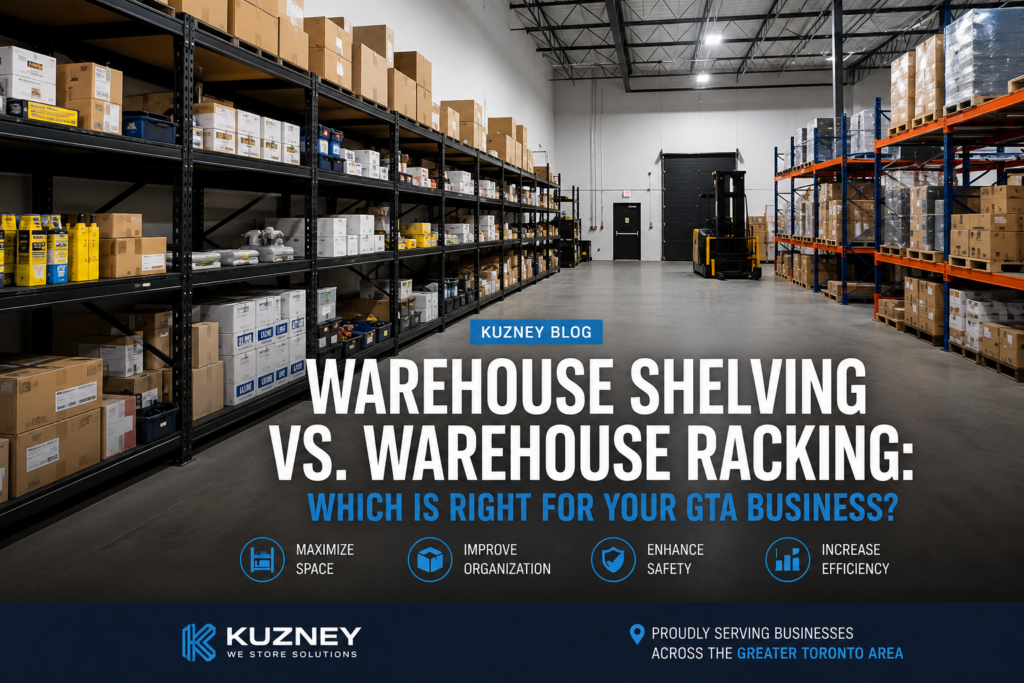
When your warehouse, workshop, stockroom, or commercial facility starts running out of space, adding more square footage is not always the answer. Often, the first opportunity is simply to make better use of the space you already have.
A well-planned storage system can help move inventory off the floor, improve organization, make products easier to find, and create a cleaner working environment.
Two common options are warehouse shelving and warehouse racking. Although these terms are sometimes used interchangeably, they are designed for different types of storage.
For businesses across the Greater Toronto Area (GTA), choosing between the two usually comes down to a few practical questions: What are you storing? How heavy is it? How does your team pick it? And how much room do you have to grow?
At KUZNEY, we work with customers looking for practical storage solutions for warehouses, offices, workshops, garages, stockrooms, and other commercial spaces. Here is how to determine which system may work better for your business.
What Is Warehouse Shelving?
Warehouse shelving is generally designed for products and supplies that employees can place onto and remove from the shelves by hand.
Think about boxes of inventory, tools, automotive parts, electrical supplies, packaged products, maintenance equipment, shipping materials, and everyday business supplies.
Unlike pallet racking, employees do not normally need a forklift to access the products. That makes heavy-duty shelving particularly useful for businesses where employees frequently pick individual items throughout the day.
It can also be a flexible option for growing businesses. Shelving units can be placed in different parts of a warehouse or stockroom and expanded as inventory requirements change. Instead of allowing cartons and supplies to accumulate on the floor, businesses can use the vertical space available along walls and throughout storage areas.
What Is Warehouse Racking?
Warehouse racking is typically designed for larger and heavier inventory, particularly products stored on pallets. Rather than manually placing individual products onto shelves, forklifts or other material-handling equipment are normally used to place pallets onto the rack.
This type of system is commonly found in distribution centres, manufacturing facilities, wholesale businesses, logistics operations, and larger warehouses.
One of the major advantages of pallet racking is its ability to use warehouse height. A facility with high ceilings may be able to store several pallet levels vertically, significantly increasing storage capacity without expanding the building.
However, warehouse racking also requires more planning. Businesses need to consider pallet dimensions, product weight, aisle width, forklift access, ceiling clearance, building conditions, installation, and applicable safety requirements.
The Simplest Question: How Do You Pick Your Inventory?
One of the easiest ways to decide between warehouse shelving and warehouse racking is to look at how your employees actually handle the products.
If employees normally walk to the storage area and pick products by hand, heavy-duty shelving will often be the more practical solution. If inventory normally moves around the warehouse as complete pallets using a forklift, pallet racking will usually make more sense.
For example, an automotive shop storing replacement parts may benefit more from shelving because employees need quick access to individual products. A distributor receiving dozens of identical cartons on pallets may benefit from keeping reserve inventory on pallet racks instead.
When Heavy-Duty Shelving Works Best
Heavy-duty shelving can work particularly well for small and medium-sized businesses because it provides a combination of accessibility, flexibility, and efficient use of space.
- Warehouses
- Automotive shops
- Contractors
- Retail stockrooms
- E-commerce businesses
- Offices
- Maintenance rooms
- Workshops
- Commercial garages
One important advantage is visibility. When products are properly organized on open shelving, employees can quickly see where inventory is located. That can reduce time spent searching through boxes or moving products just to reach something stored behind them.
A Local GTA Business Focus
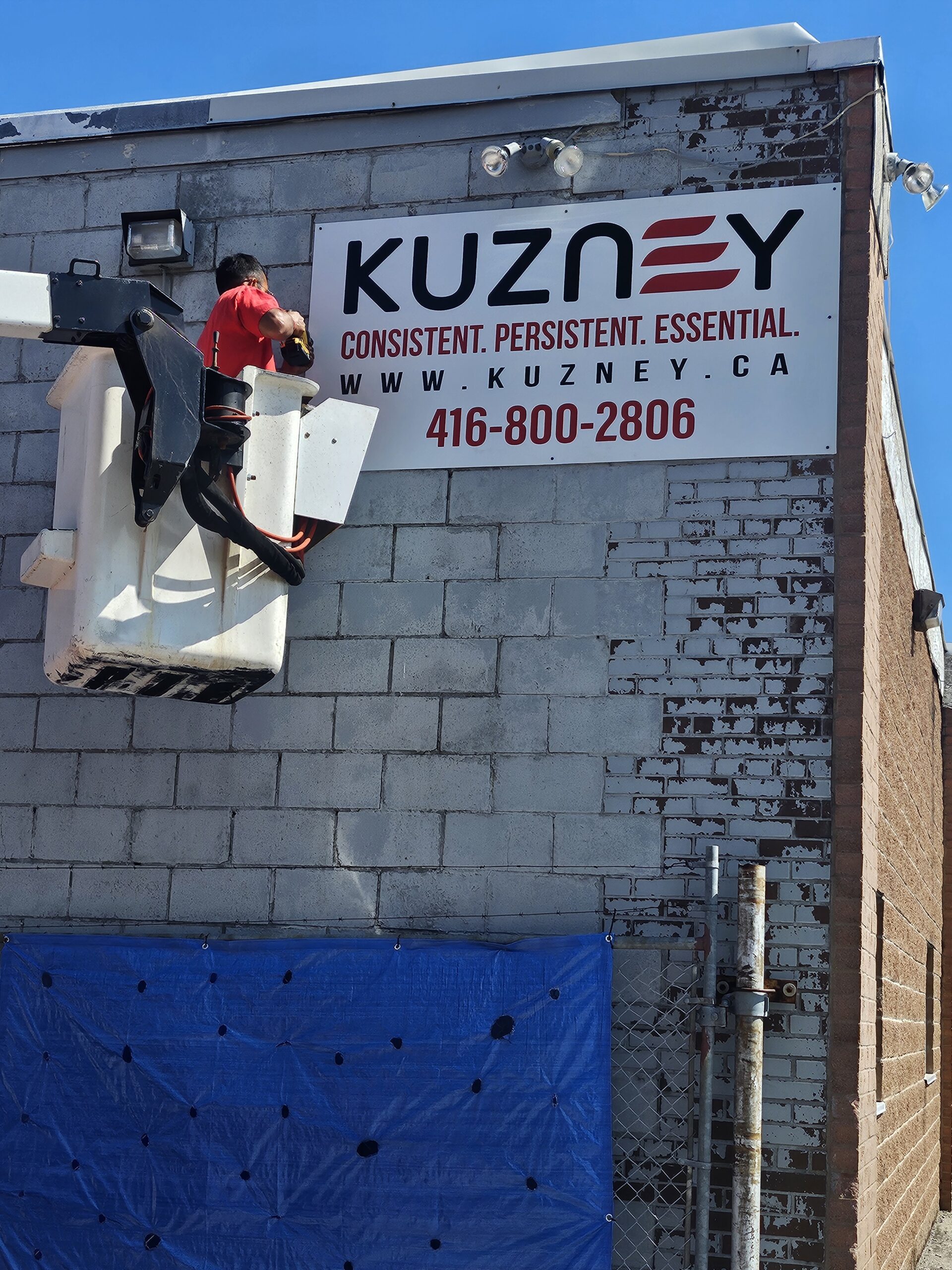
KUZNEY is focused on serving customers throughout the Greater Toronto Area with practical products and storage solutions. Our own company sign installation represents an important part of that growth: building a recognizable local business while staying close to the warehouses, shops, contractors, offices, and homeowners we serve.
As we expand our Warehouse Solutions service, the goal is to look beyond individual shelving units and help customers think about how their entire storage area can work better.
When Warehouse Racking Makes More Sense
As inventory becomes larger, heavier, or increasingly palletized, warehouse racking becomes more attractive. Imagine receiving 20 pallets containing the same product. Breaking every pallet down and manually placing hundreds of cartons onto individual shelves may create unnecessary work.
Instead, reserve inventory can remain palletized and be stored vertically until it is required. Warehouse racking may therefore be more suitable when inventory arrives on pallets, forklifts are already being used, products are stored in large quantities, warehouse ceilings provide significant vertical space, or bulk inventory needs to be stored efficiently.
The correct layout should still consider how employees move through the warehouse. Maximizing storage density is useful, but a warehouse also needs practical aisles, receiving areas, shipping areas, and safe access to inventory.
Sometimes the Best Answer Is Both
Many businesses do not actually need to choose exclusively between shelving and racking. A combination can be extremely effective.
For example, imagine a GTA distributor that receives products by the pallet but ships individual cartons to customers. Bulk inventory could remain on pallet racking toward the back of the warehouse. A smaller quantity could then be transferred to heavy-duty shelving near the picking and packing area.
Employees get quick access to everyday inventory without having to retrieve a full pallet every time an order arrives. As shelving inventory becomes depleted, it can simply be replenished from the reserve pallet stock.
Do Not Design Your Warehouse Around Empty Walls
One common mistake is deciding where shelving should go simply because there happens to be an empty wall. Instead, think about workflow.
Where do deliveries enter the building? Where is inventory checked? Where do employees pick products? Where are orders packed? Where do completed orders leave the warehouse?
Products that employees use every day should generally be easier to access than inventory that moves once every few months. Likewise, heavy products should be stored at appropriate heights, while receiving and shipping areas should have enough room to operate without constantly blocking aisles.
Think Vertically Before Looking for More Space
Commercial space in the GTA can be expensive. Before deciding that your business needs a larger warehouse, look upward.
Many businesses have considerable unused vertical space. Boxes may be stacked on the floor while several feet of perfectly usable space remains above them. Proper shelving can turn that unused height into organized storage capacity.
The same principle becomes even more important in warehouses with high ceilings, where pallet racking may allow multiple levels of inventory. Making better use of vertical space can sometimes delay the need for a larger facility while making the existing warehouse easier to operate.
Plan for the Business You Are Becoming
Your storage requirements probably will not remain exactly the same. Inventory may increase, new products may be introduced, you may hire additional employees, and your shipping volume may grow.
That is why storage should be planned with some flexibility. A business may begin with several heavy-duty shelving units and add additional rows as inventory grows. Another business may eventually transition part of its warehouse from shelving to pallet racking as purchasing quantities increase.
The goal is not to build more storage than you need today. It is to avoid creating a layout that becomes a problem tomorrow.
Commercial Orders and Delivery
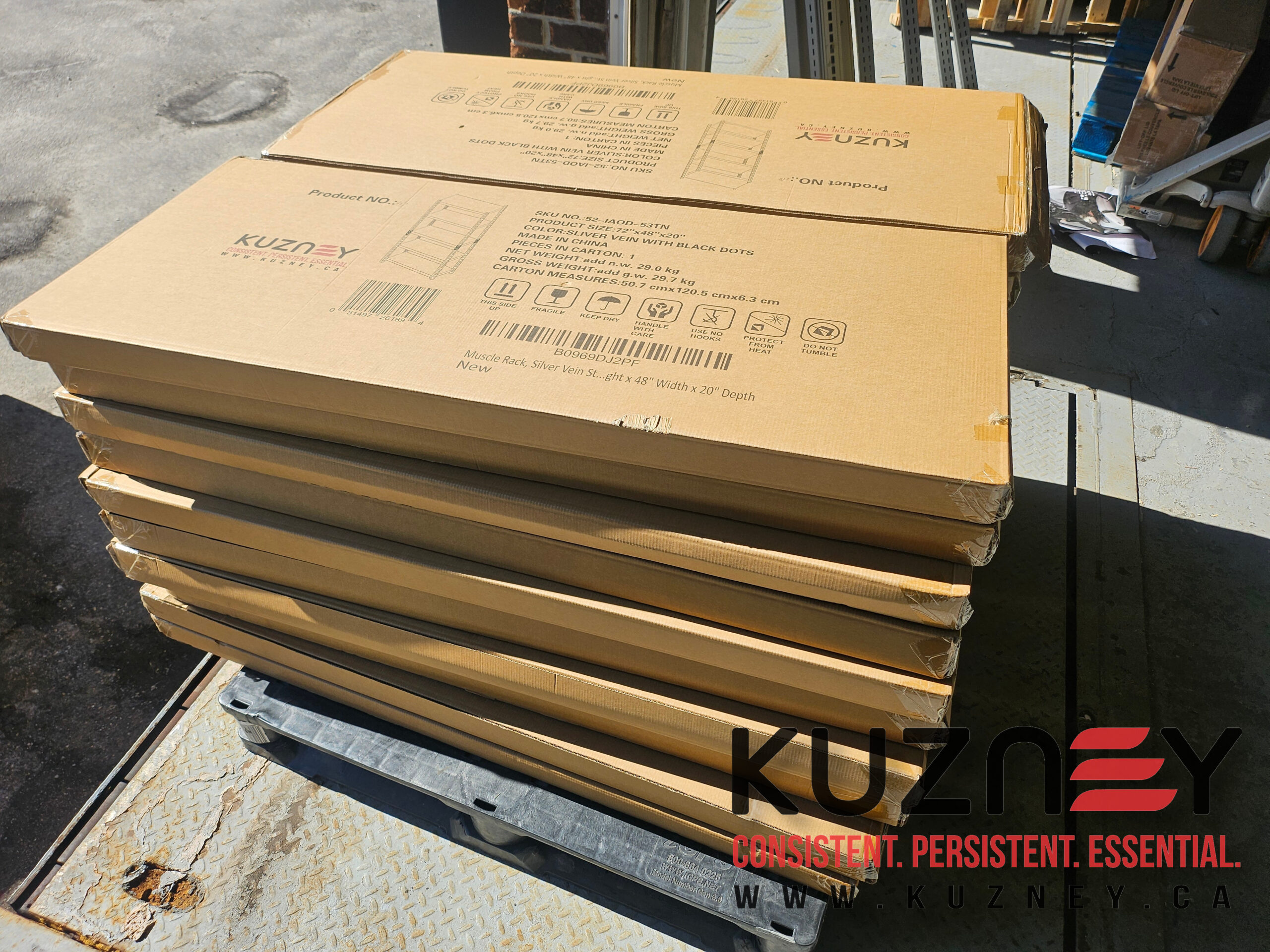
Commercial storage projects do not end when the shelving is selected. Products still need to be prepared, handled, and delivered efficiently. For larger orders, coordinating around a customer’s receiving area or dock can make the process much easier.
KUZNEY works with customers across the GTA, from businesses purchasing several shelving units to commercial customers improving larger storage areas. Real orders like this help us understand the practical side of warehouse storage, from product selection through to getting shelving ready for the customer’s facility.
Warehouse Shelving vs. Racking: Quick Comparison
| Heavy-Duty Shelving | Pallet Racking | |
|---|---|---|
| Inventory | Boxes, tools, parts, supplies | Palletized goods |
| Picking | By hand | Forklift/equipment |
| Typical users | Shops, stockrooms, smaller warehouses | Warehouses, distributors, manufacturers |
| Flexibility | High | More planned/fixed |
| Vertical storage | Moderate | High |
| Best for | Frequently accessed inventory | Bulk inventory |
Questions to Ask Before Choosing
- What products are being stored?
- What are the heaviest items?
- Are products picked individually or by pallet?
- How much vertical space is available?
- Does your facility use forklifts?
- How frequently does inventory move?
- How much do you expect inventory to grow?
- Where are receiving and shipping areas located?
Answering these questions can make it much easier to identify the appropriate storage system. For additional planning considerations, read our guide on how to choose the right warehouse racking system for your GTA business.
Frequently Asked Questions
Is warehouse shelving the same as pallet racking?
No. Warehouse shelving generally stores products that employees can access manually. Pallet racking is normally designed for palletized inventory handled using forklifts or other equipment.
Can heavy-duty shelving be used in a commercial warehouse?
Yes. Heavy-duty shelving can be an effective solution for boxes, tools, parts, supplies, and other manually handled inventory when the shelving is suitable for the intended load and use.
Can shelving and pallet racking be used together?
Yes. Many warehouses use pallet racking for bulk inventory and shelving for frequently picked products.
Does KUZNEY provide warehouse shelving in the GTA?
Yes. KUZNEY works with commercial and residential customers throughout the Greater Toronto Area and provides heavy-duty shelving and storage solutions for a variety of spaces.
Make Better Use of Your Existing Space
The best storage system is not necessarily the largest or most complicated system. It is the one that fits your inventory, workflow, available space, and plans for growth.
For many GTA businesses, heavy-duty shelving provides a practical way to organize products and take advantage of unused vertical space. Businesses handling larger quantities of palletized inventory may benefit from warehouse racking, while others may find that a combination of both provides the best result.
KUZNEY is continuing to expand beyond individual storage products toward helping businesses create more complete storage solutions. If you are reorganizing a warehouse, opening a new facility, or simply trying to get inventory off the floor, visit our Warehouse Solutions page or contact KUZNEY to discuss your storage needs.